
A RELOCATION GUIDE FROM HATCH HOMES GROUP
Moving to Portland, OR
Everything you actually need to know before you get here.
Most relocation guides will tell you Portland has good coffee and it rains a lot. Both true. Neither helps you decide where to raise your kids, what you can get for your money, or whether you'll be happy here in February. We've been helping people land in this city for 30 years. Between us we've lived in all four quadrants, and we still catch ourselves feeling like tourists in our own neighborhoods some mornings. What follows is the version of this conversation we have with clients every week, written down.
Median home price
$555,000
Across the Portland metro; about $535,000 inside city limits
Market pace
54 days
Roughly 3.3 months of inventory; homes average about 54 days on market
Metro population
2.5M
Across seven counties, in two states
Sales tax
None
Zero. Not a typo
State income tax
4.75–9.9%
Plus additional Portland-area local taxes above $125K
Property tax
~1%
Of assessed value in Multnomah County; assessed growth capped at 3% a year
Rainfall
43 in.
A year, spread across roughly 155 damp days, mostly October through May
Summer
Low 80s
Warm, dry, low humidity — almost no rain from July through September
Updated August 2026
01- ORIENTATION
START WITH THE RIVER
Portland is split by the Willamette River, and that split does more work than any other single fact about this city. Locals talk in quadrants: Northeast, Southeast, Northwest, Southwest, plus North Portland, which is technically a fifth sextant and technically its own personality. Addresses carry the quadrant right in them. Once you know that 4517 NE 85th Ave and 1205 SE Marion St are in genuinely different worlds, you've learned the most important thing about navigating this city. Here's the shorthand, and then we'll get into it.
East side
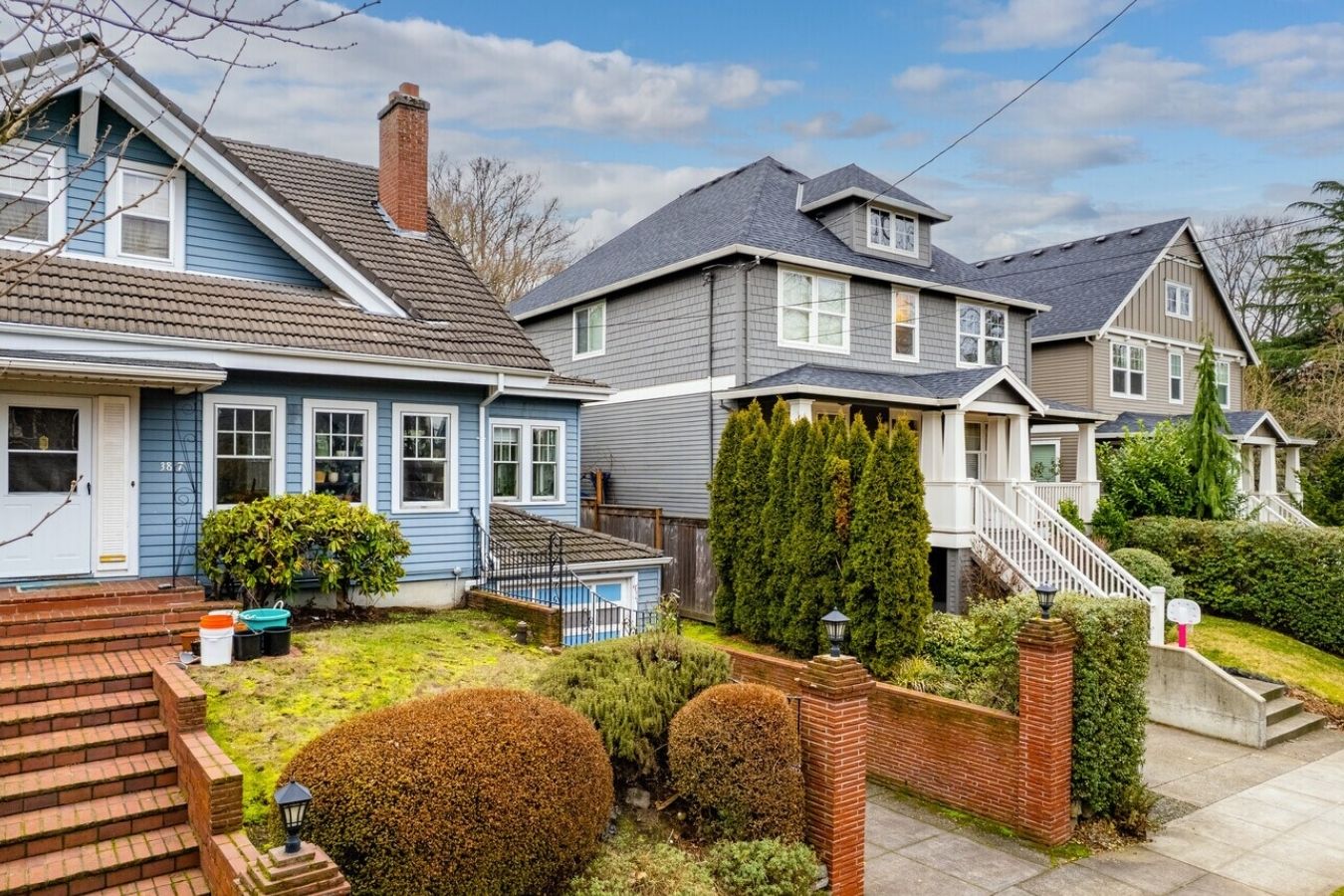
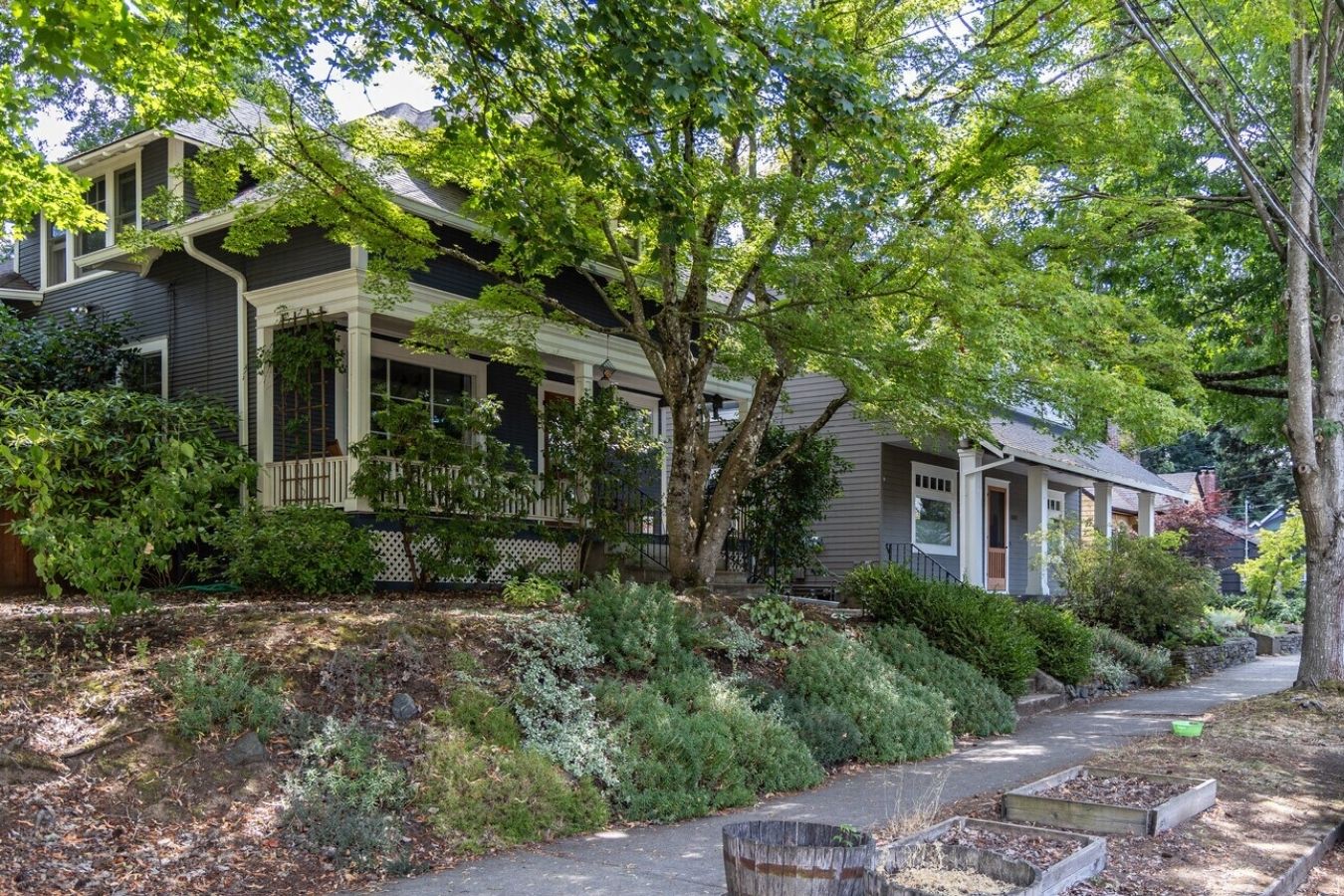
Flatter, more bikeable, more walkable in the small-neighborhood sense. Charming old bungalows and craftsman homes on tree-lined streets, with commercial main drags every mile or so. A little grittier. Historically more affordable, though the best pockets are no longer cheap.
West side
Hillier, greener, more established. Bigger lots, higher property values, more trails, more traditional suburbs as you move out. Fewer of the dense walkable strips, with a few notable exceptions.
Neither is better. They just ask different things of you.


02 — East of the river
The East Side
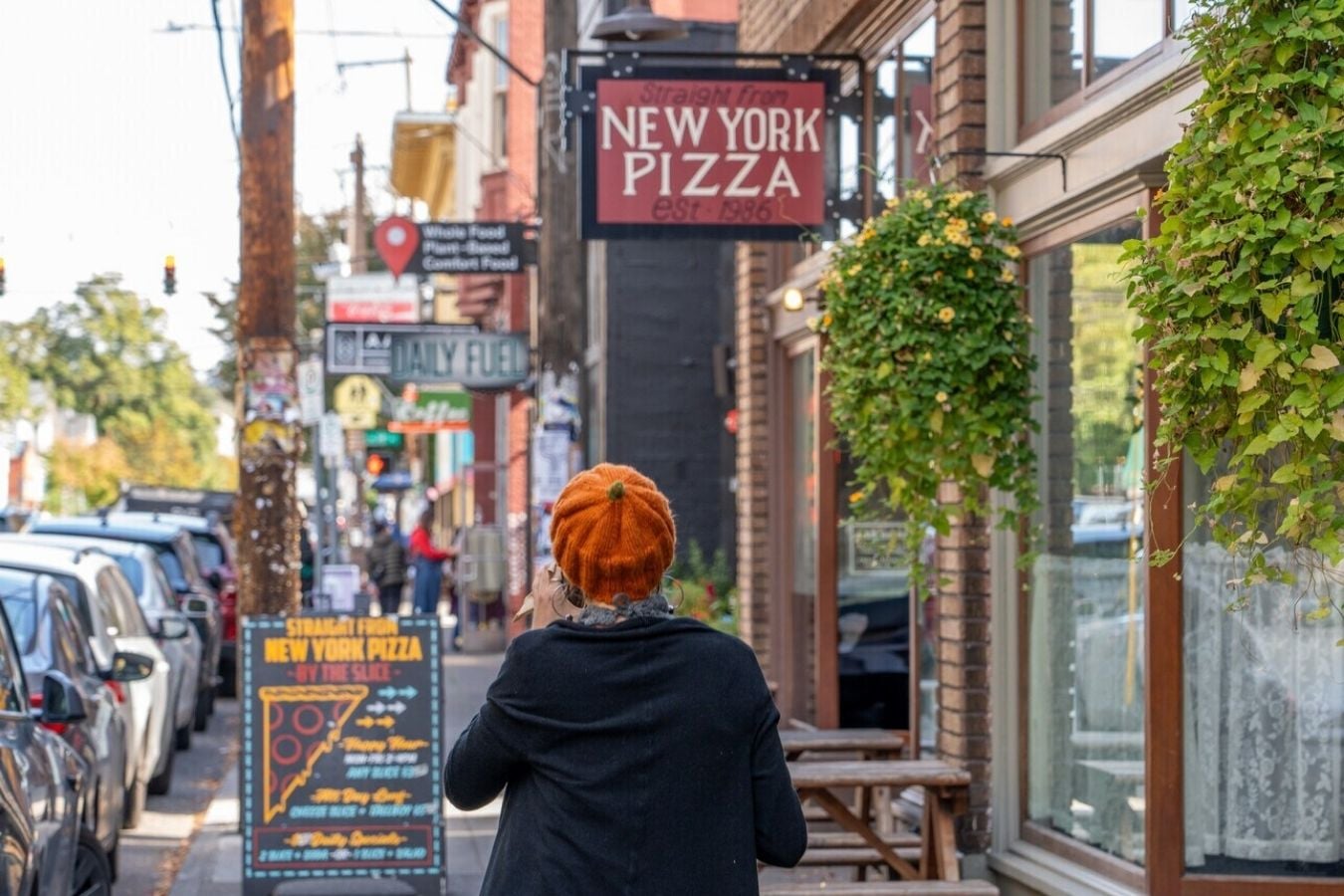
If your picture of Portland involves biking to a coffee shop and knowing your neighbors, you're picturing the east side. Several of us live over here, so fair warning on the enthusiasm. The land is flat, the grid is generous, and the neighborhoods grew up around streetcar lines a century ago. That's why almost every east side neighborhood has a main street with restaurants, a bar, a bookstore, and somewhere to get a haircut. Hawthorne, Division, Alberta, Mississippi, Woodstock, Sellwood. Each one is a little self-contained village.
The trade-off has historically been schools. Portland Public Schools performance varies a lot by attendance zone, and the east side neighborhoods with the strongest schools (Grant Park, Eastmoreland, Alameda, Laurelhurst) are also the most expensive ones. If schools are your top priority and your budget is tight, this is the tension you'll be working with.
Neighborhoods to know
Sellwood and Westmoreland
SESouth of downtown, right on the river, and one of the neighborhoods we know from the inside rather than from a map. Here's the honest read: it's the kind of place where you catch yourself feeling like a visitor in your own city. Waterfront condos next to new infill next to 1920s bungalows and Victorians. The main drag has restaurants, shops, and the best antique hunting in Portland. Sellwood Riverfront Park gives you beach access and a dog park. Oaks Amusement Park is an old Portland institution, roller skating in winter and rides in summer, and part of Free Willy was filmed there. Walk Scores in the 80s and 90s are common.
Eastmoreland
SEA storybook neighborhood next to Reed College, worth driving through even if you can't buy there. Duniway Elementary sits right in the middle of it, so a slow loop around the school will tell you almost everything about the area. That's a trick we use on every neighborhood tour we run: drive the school at pickup time and you'll learn more in ten minutes than in an hour of reading listings.
Woodstock
SECute, steady, and grew up around a New Seasons and a well-regarded Mandarin immersion program at the elementary school. Good value relative to its neighbors.
Mount Tabor and Hawthorne
SEMount Tabor is an extinct volcano in the middle of the city with genuinely amazing trails and a view worth the climb. The neighborhoods ringing it are some of the prettiest in Portland. One planning note we give every buyer looking here: north and west of the park runs more expensive than east and south. Same park, different price.
Alameda and Beaumont-Wilshire
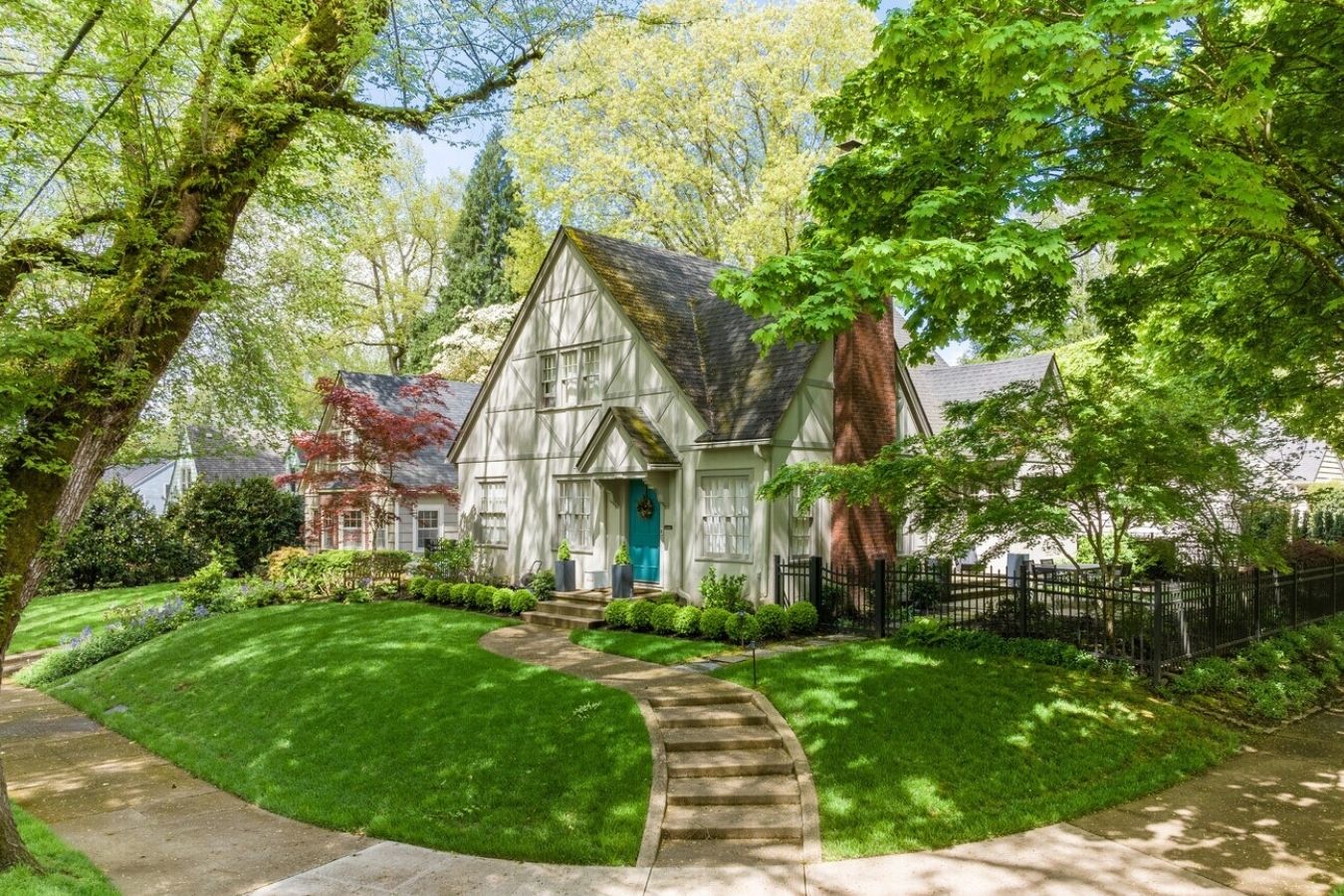
NENortheast, and this is where the architecture gets showy. Tudors, colonials, and Craftsman homes on curving streets. Grant High School has a full park attached to it, which is a genuinely rare amenity.
North Portland
NMississippi, Boise-Eliot, St. Johns, Arbor Lodge. This side of town has the highest-density zoning in the city, so you'll find more infill projects, more variety in housing type, and more variety in price. It's also the part of Portland with the most complicated history around gentrification, and that history is worth understanding before you buy here. Schools are generally not the draw. Personality absolutely is.
Further east
EMontavilla, Cully, the Parkrose and Gresham areas, Happy Valley. This is where a lot of our buyers find the most house for the money, and where new construction is most available. Happy Valley in particular has grown fast and pulls families who want newer homes and strong schools.
Want the east side neighborhoods that fit your budget and commute? Send us your must-haves.
03 — West of the river
The West Side
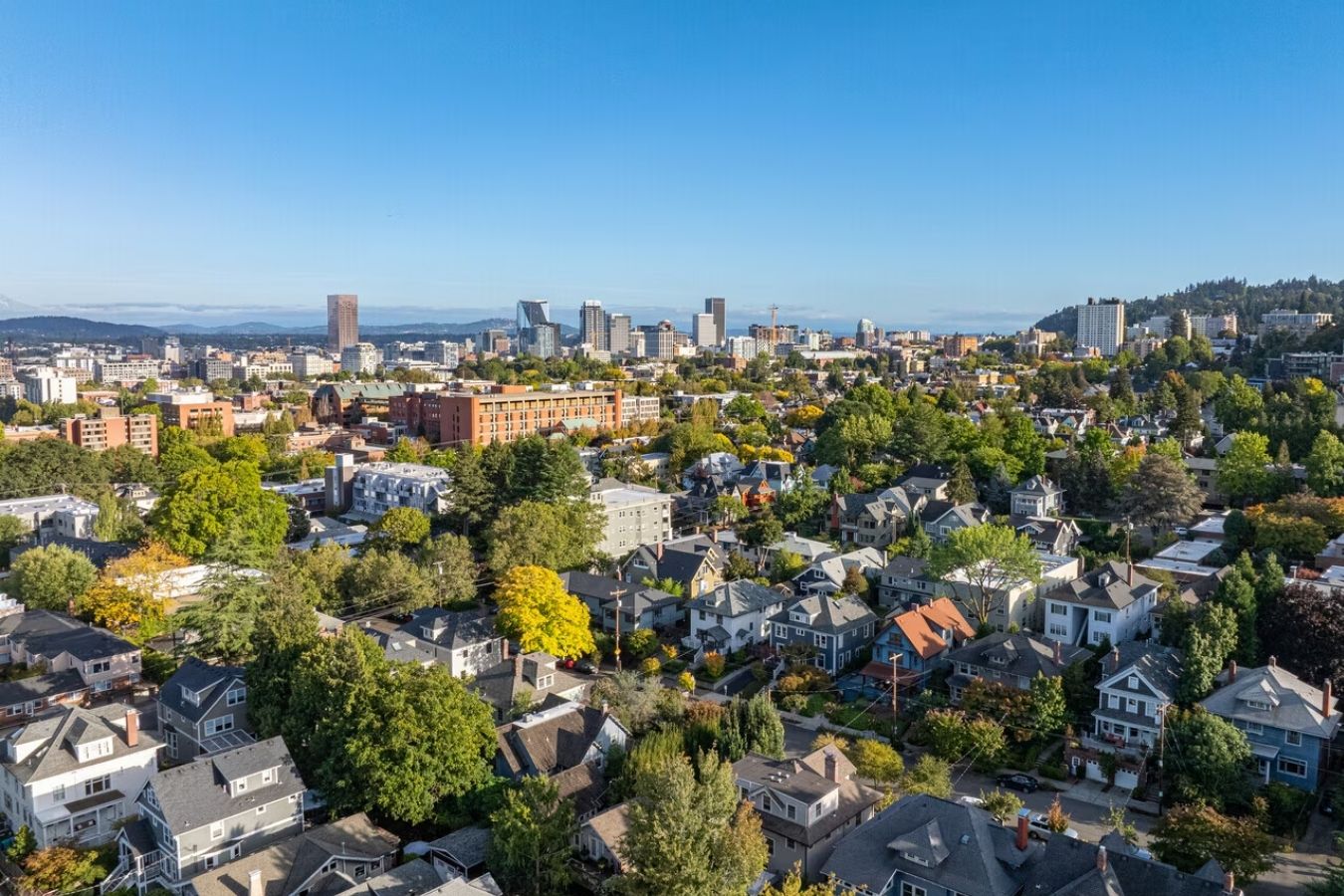
Cross a bridge heading west and the terrain changes under you. Hills, ravines, big trees, winding streets. The west side has been established and higher-value for longer, and that shows up in property taxes and in the housing stock. Fewer streetcar-era commercial strips, more trail access, more traditional suburban development as you head toward Beaverton and Hillsboro.
The way we usually put it: the east side has had a modern renaissance, while the west side has simply been valuable for a long time. If you're working at Intel in Hillsboro or Nike in Beaverton, this is almost certainly your side of the river.
Neighborhoods to know
NW Nob Hill and SW Portland Heights
NW / SWThe most urban-feeling residential Portland gets. Beautiful architecture, mixed-use buildings, luxury condos and historic homes, and a shopping and dining stretch that draws people from all over the region. You're minutes from the Forest Park trailheads and Washington Park.
Forest Heights
NWA planned community just outside the city with walking trails, mostly 1990s and newer construction, and highly rated schools. Primarily large single-family homes, with some townhomes and condos nearby. Popular with relocating executives who want turnkey and don't want a renovation project.
Multnomah Village
SWOne of the few genuinely walkable Southwest neighborhoods outside of downtown. Small, charming, close in, and it holds its value well.
Johns Landing and the South Waterfront
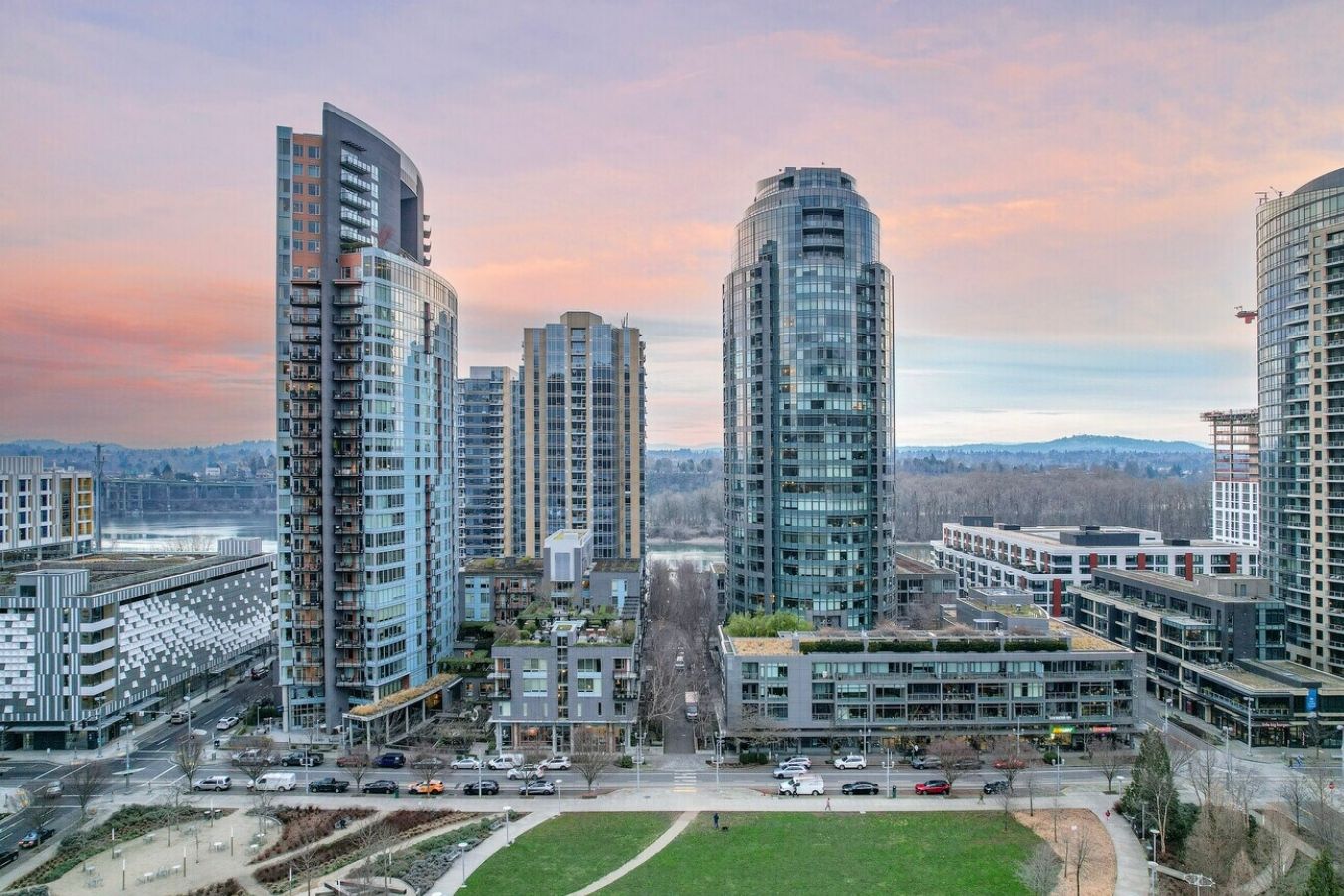
SWJohns Landing is a quiet riverfront pocket next to Willamette Park, and our advice is to skip the listings and just go walk it. It doesn't photograph the way it feels. The Water Tower building is getting a major redesign that should be good for the whole area. South Waterfront is condo territory with the OHSU tram running overhead, and it's the right answer for a specific kind of buyer.
Cedar Hills, Vista Hills, and Downtown Beaverton
SuburbanThe suburbs that keep getting better. Cedar Hills Crossing still has some strip mall energy, but it's elevated and close in, and the surrounding neighborhoods hide some genuinely dreamy mid-century homes. Downtown Beaverton has been attracting Portland restaurants for a few years now.
Lake Oswego and Mountain Park
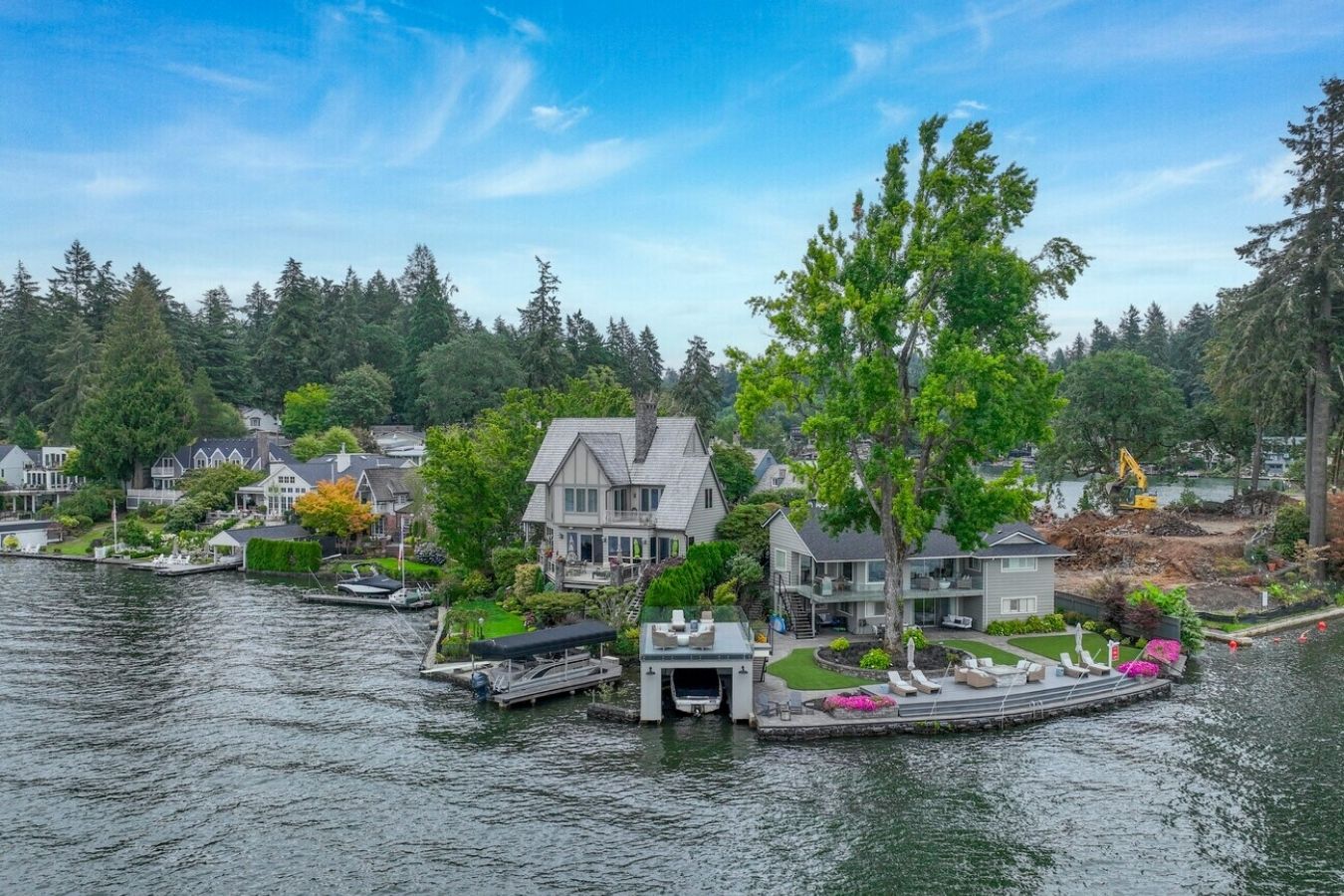
SuburbanOne of the most expensive submarkets in the metro, and consistently the top-ranked school district in Oregon. First Addition is the walkable commercial core, and it's lovely. Important detail most people miss, and one we've watched trip up more than one out-of-state buyer: the lake itself is private, and only specific neighborhoods hold easements to use it. Check before you fall in love with a house because of the water. Mountain Park is a planned community within LO known for trails and a community center with a pool and courts.
West Linn
SuburbanAbout 30 to 45 minutes south of downtown. Multimillion-dollar estates alongside smaller neighborhoods around historic Willamette. West Linn-Wilsonville is another perennial top-three Oregon district.
Hillsboro, Tigard, Tualatin, Sherwood
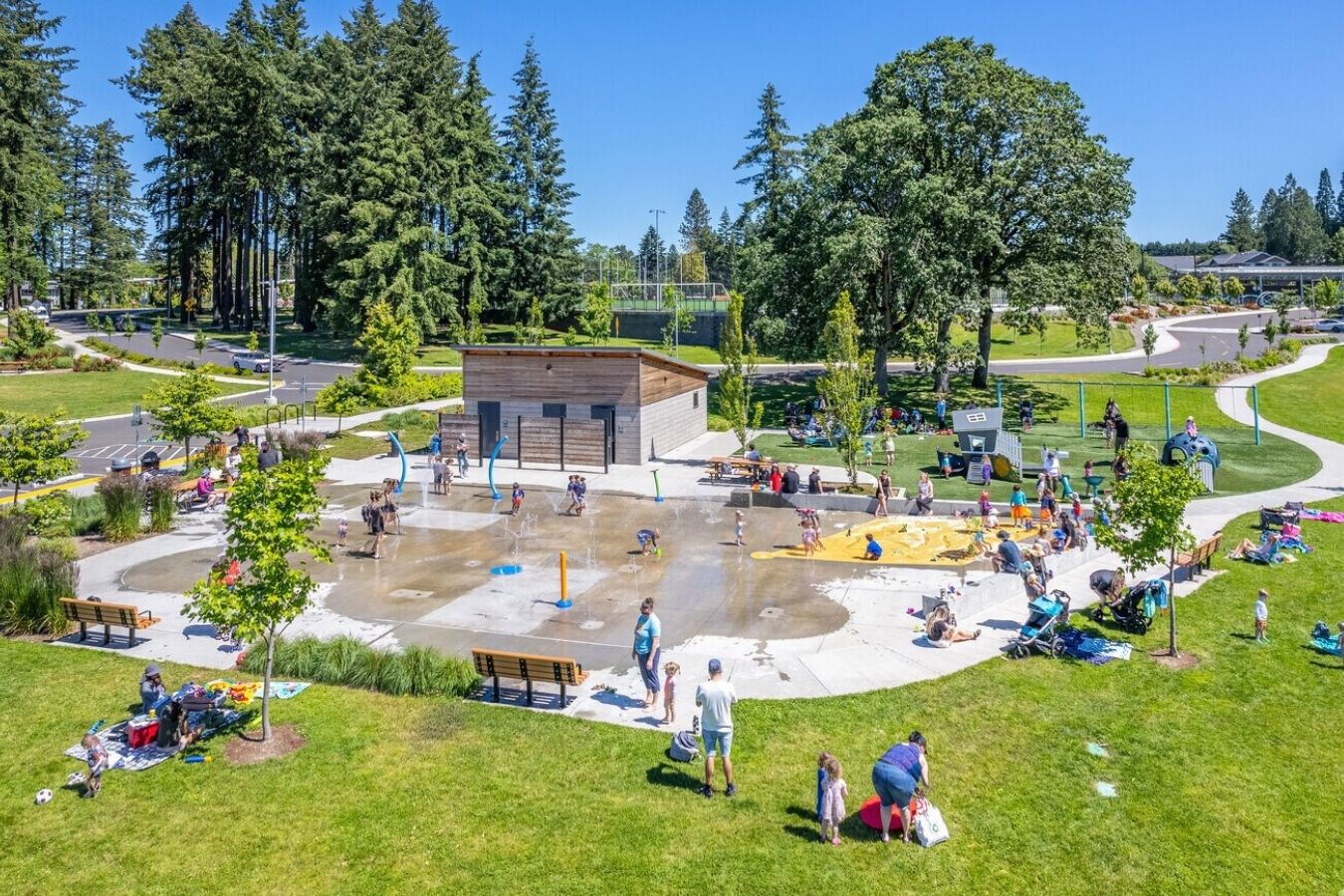
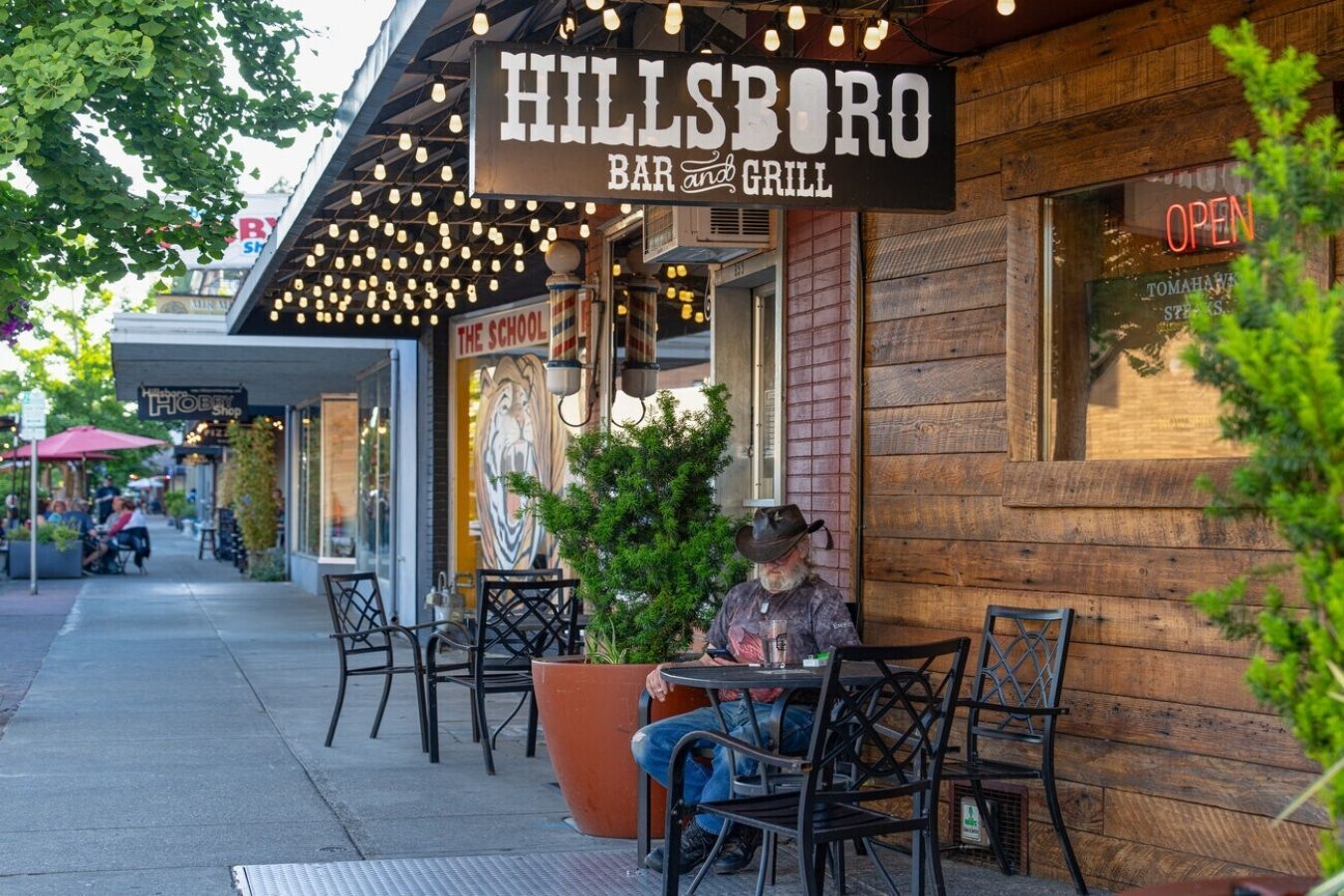
SuburbanThe employment-driven west side. Hillsboro is the Silicon Forest anchor. Sherwood and Tualatin are family-heavy with strong schools. All four give you newer housing stock and more square footage than close-in Portland.
04 — Over the state line
The third option: across the Columbia
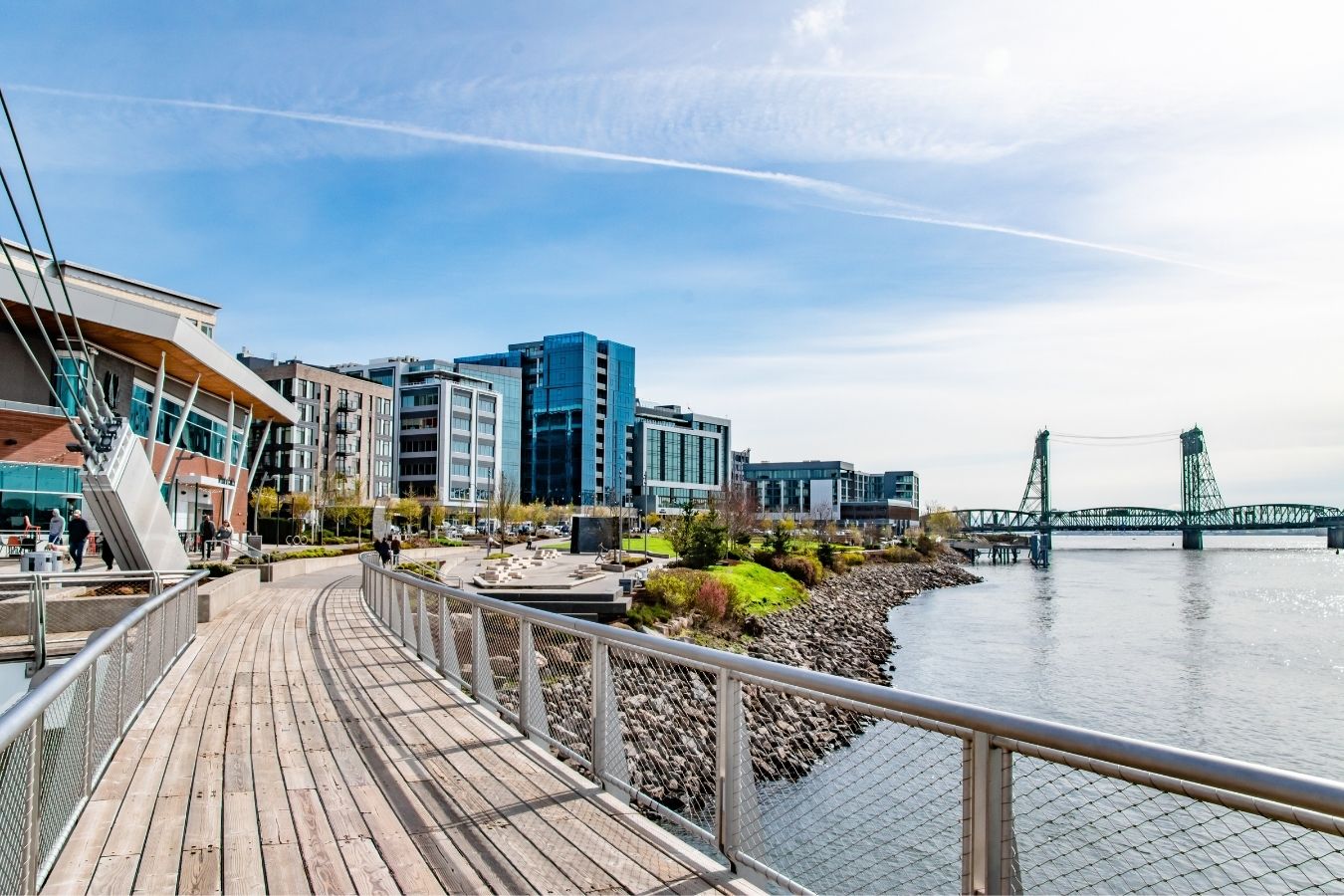
Here's something relocation guides written by Portland-only agents will skip. The Columbia River is the Oregon-Washington border, and Vancouver, Camas, and the rest of Clark County are fifteen to thirty minutes from downtown Portland. Washington has no state income tax. Oregon has no sales tax. Some people live on the Washington side and do their big shopping on the Oregon side, and the math on that is real enough that it has measurably shifted where people live.
Clark County has been one of the fastest-growing counties in Washington, and a meaningful share of that growth came from people crossing the river. Camas schools consistently rank in the top handful in the entire Portland metro, competing directly with Lake Oswego. The Vancouver waterfront has been redeveloped into something genuinely good.
The trade-offs: you're paying sales tax on everyday purchases, the bridges can be brutal at rush hour, and the culture is different from close-in Portland in ways that matter to some people and not at all to others. We work both sides of the river. If the tax question is a real factor for you, it's worth an actual conversation rather than a rule of thumb, because the answer changes a lot depending on your income, your spending, and where you work.
Not sure which side of the river makes sense? Let's run the numbers together.

Explore every neighborhood on the map
Hover over any area to see its neighborhoods, then click through for market trends, active listings, schools, and local businesses.
05 — The market
The Portland real estate market, honestly
As of summer 2026, the metro median sale price sits around $555,000, with the average closer to $632,500. Inventory is running about 3.3 months, which is close to balanced, and homes are averaging roughly 54 days from list to pending. Prices have been essentially flat year over year after a few years of cooling from the pandemic peak.
Translation: this is a workable market. Not the frenzy of 2021, not a fire sale. Well-priced homes in desirable neighborhoods still move fast and still see multiple offers. Overpriced homes sit. Buyers have real negotiating room they didn't have three years ago.
Two Portland-specific things that will affect you and that nobody warns you about:
The urban growth boundary
Oregon adopted a regional growth boundary in 1979 that limits where new development can happen. It's why you can drive twenty minutes from downtown and hit actual farmland. It's also a permanent constraint on housing supply, and it's a big part of why close-in Portland prices behave the way they do. Land here is genuinely finite in a way it isn't in Phoenix or Dallas.
Oregon property taxes don't reset when you buy
This is the opposite of California. Under Measure 50, assessed value grows at a capped 3% per year, and that assessed value transfers with the property rather than resetting to your purchase price. It means two identical houses on the same block can have very different tax bills depending on their assessment history. Always look at the actual tax record on a specific property, never a rule of thumb.
We'll pull that record for you on anything you're seriously considering. That's the kind of thing that's easy for us and nearly impossible to figure out from a Zillow listing.
06 — Schools
Schools
Oregon assigns students by attendance boundary, so in Portland the school question and the neighborhood question are the same question. Get the address right and the school follows.
Inside Portland Public Schools, quality varies significantly by zone. Grant, Lincoln, Cleveland, and Ida B. Wells all have strong reputations and strong home values attached to them. There's also a robust private and independent school scene, plus language immersion programs (Mandarin at Woodstock, Spanish and Japanese elsewhere) that families move specifically to access. If schools are your top filter, tell us that first. It changes the whole search.
The districts that consistently rank at the top of the metro:
Lake Oswego and Riverdale
Riverdale is a tiny district south of downtown serving the Dunthorpe area. The two trade the number one and two spots in Oregon year after year.
West Linn-Wilsonville
Right behind them, and known for strong science programs.
Camas, Washington
Ranks in the metro's top three and is often the answer for families who want elite schools without Lake Oswego pricing.
Beaverton
Large and uneven, but its magnet options are outstanding. The International School of Beaverton and Beaverton Academy of Science and Engineering both rank at the very top of Oregon statewide.
Sherwood, Tualatin, and Tigard
Round out the strong suburban options.
07 — Work
Jobs and the economy
Portland's economy sits on four pillars, and they're more different from each other than most cities' are.
01
Healthcare
The biggest. OHSU employs around 20,900 people regionally, Providence around 19,200, Legacy Health 14,000, and Kaiser Permanente 13,300. OHSU sits on the hill above downtown and functions as a research university as well as a hospital system.
02
Semiconductors and hardware
Intel has roughly 17,600 employees in the region, concentrated in Hillsboro, and it anchors what everyone calls the Silicon Forest. Lam Research, ASML, Tokyo Electron, Analog Devices, Qorvo, Applied Materials, and TSMC's Camas operation all have significant local presence.
03
Athletic and outdoor apparel
This is Portland's global signature. Nike is headquartered in Beaverton with about 10,500 regional employees. Adidas America's U.S. headquarters is here. So is Columbia Sportswear, along with Keen, Leatherman, and dozens of smaller brands. No other city in the country has this concentration.
04
Everything else that makes a real city
Amazon, Fred Meyer's corporate headquarters, Daimler Truck North America, Precision Castparts, Alaska Airlines, U.S. Bank, Portland General Electric, Boeing in Gresham, LAIKA the stop-motion animation studio in Hillsboro.
Hybrid work is the norm now rather than fully remote. Expect two to three days in the office in most tech and apparel roles, which matters more than people expect when they're choosing between Sellwood and Hillsboro.
08 — Taxes
Taxes: the part everyone gets wrong
Three numbers decide whether Oregon treats you well or not, and they pull in different directions.
Sales tax
None
Oregon is one of five states with none, and there are no local sales taxes either. On a car, a laptop, a couch, or a full kitchen remodel, that's real money.
Income tax
High
State rates run 4.75% to 9.9%, and the 9.9% bracket starts at $125,000 for single filers. If you live inside Multnomah County and the Metro district, two local taxes stack on top for higher earners: a 1% Metro Supportive Housing Services tax and a Multnomah County Preschool for All tax of 1.5%, rising to 3% at higher income levels. Combined, a top earner in Portland proper can face one of the heaviest income tax burdens of any American city.
Property tax
Moderate
Multnomah County's effective rate runs a bit above 1% of assessed value, the highest in Oregon, with the rest of the metro somewhat lower. Remember the Measure 50 quirk above.
One oddity: Portland residents pay a flat $35 arts tax each year. Everyone forgets. Then a letter arrives.
The honest summary: if you're a moderate earner who spends a lot, Oregon treats you well. If you're a high earner in Multnomah County, you should model this carefully before you choose a side of the river. We're not tax advisors, but we've watched enough clients run these numbers to know which questions to ask your CPA.
09 — Weather
The weather, without the spin
It rains about 43 inches a year over roughly 155 days, mostly between October and May. But the volume isn't the story. It's a persistent grey drizzle, not a downpour, and you'll go long stretches without seeing direct sun. December averages barely two hours of sunshine a day.
Then summer arrives and Portland becomes one of the best places on earth. Highs in the low 80s, almost no humidity, essentially no rain from July through mid-September, and long evenings that cool off nicely. July gets over eleven hours of sunshine a day. There's a reason locals plan their entire year around it.
Things worth knowing before you commit:
43 in.
Annual rainfall
155
Days with rain
Low 80s
Average July high
Seasonal affective disorder is a genuine consideration here, not a joke. Most locals own a light therapy lamp and take a February trip somewhere sunny.
Air conditioning used to be rare in older housing stock. That's changed fast after recent heat waves, and A/C is now a feature buyers actively filter for. If you're looking at a pre-1990 home, check.
Snow is rare, usually under a few inches a year, and when it does snow the city more or less stops. Consider it a bonus day off.
10- LIFE HERE
Weekends here are different
This is the part that converts people. Within about 90 minutes of your front door: Mount Hood for skiing from November into summer, the Columbia River Gorge with its waterfall corridor and world-class windsurfing, and the Oregon Coast, which is public beach for its entire length by law. About three hours gets you to Bend and the high desert, or to Crater Lake.
You don't have to leave town, either. Forest Park covers more than 5,100 acres inside city limits with 80 miles of trails, making it one of the largest urban forest reserves in the country. Washington Park holds the Japanese Garden, the Rose Garden, the Oregon Zoo, and Hoyt Arboretum. Mount Tabor and Powell Butte are both extinct volcanoes you can hike on a weeknight. Add in more than 300 wineries and 500 vineyards across Oregon, with the Willamette Valley pinot country starting about 45 minutes southwest.
And then the city things: Powell's, the largest independent bookstore in the world. Food cart pods. A coffee scene that's genuinely world-ranked. Nearly 60 breweries inside the city. The Timbers and the Thorns, whose supporter culture is unlike anything else in American sports. The Blazers. First Thursday in the Pearl and Last Thursday on Alberta.
11 — FAQ
The questions people are actually afraid to ask
We'd rather answer these than have you find them somewhere else.
It was, badly, from 2020 through about 2023. It's recovering meaningfully now. Foot traffic is back to roughly 70% of pre-pandemic levels and climbing, the city reports tent counts downtown down around 75%, and new restaurants and retail keep opening. There are still vacant storefronts. But if your impression of Portland is built on 2021 headlines, it's out of date.
It spiked, and it has come down sharply. Homicides fell from 95 in 2022 to 73, then 68, then 51 in 2025. In the first half of 2025 Portland posted the steepest drop in violent crime of any major American city. Property crime, especially car break-ins, remains the thing most residents actually deal with. The violent crime that exists is heavily concentrated in Old Town and Chinatown, not in the residential neighborhoods where most people live.
Still visible, still a real challenge, and improving. It's the issue that will most shape your daily impression of the city depending on where you spend your time.
This one is real and underdiscussed. Portlanders are friendly but reserved, and transplants consistently report that building a social circle takes deliberate effort. Join something. A run club, a climbing gym, a volunteer group, a neighborhood association. It works, it just doesn't happen by accident.
No, and it isn't close. Portland's cost of living runs about 16% above the national average, roughly half of San Francisco's, and homes here cost substantially less than Seattle's median. It is meaningfully more expensive than the Midwest or the South, and people relocating from those places are often surprised.
12 — Working with us
How we actually help people relocate
Relocating is a different job than buying a house across town. You can't drop by a Tuesday open house. You're making decisions about neighborhoods you've never stood in. You're often on a timeline set by someone else. Here's what we do about that.
01
Before you visit
We narrow the field with you over a call. Commute, schools, budget, what kind of street you want to walk out your front door onto. Then we send you neighborhood breakdowns and off-market intel so you're not starting from scratch.
02
When you visit
We build you an actual driving tour. Not a list of showings, a route through the areas that fit, at the time of day you'd be commuting, with stops at the coffee shops and parks and school pickup lines. People decide on neighborhoods with their feet.
03
Video walkthroughs
If you can't get here, we go for you and walk the house on camera, including the parts a listing photo will never show you.
04
Our team model
Hatch Homes has been a team for 30 years, and it's built so that you get several specialists rather than one generalist. Someone who knows Sellwood inside out. Someone who knows the Hillsboro tech relocation timeline. Someone who's done a dozen Clark County cross-border deals. You get all of them for the price of one agent.
05
After closing
We're a local resource that doesn't expire. Contractors, landscapers, the good dentist, which side of Mount Tabor to hike on a Sunday. We're not in this to sell you a house. We're here to be the people you call about your next one, and the one after that.

Come talk to us
You don't need to be ready to buy. You don't need a timeline. If you're at the stage of trying to figure out whether Portland is even the right answer, that's a conversation we're happy to have. Tell us what you're weighing. We'll tell you what we actually think, including when the honest answer is that a different neighborhood, a different side of the river, or a different city fits you better.
Proud to be your Portland real estate experts. Serving the greater Portland metro area and Southwest Washington for 30 years.
